
ADVERTISEMENT
Friday, June 12, 2026
Tech | Business | Economy
No Result
View All Result
  • Technology
    • Trends
    • Telecoms
      • Broadband
    • ConsumerTech
      • Gadgets and Appliances
      • Apps
      • Accessories
      • Reviews
      • Unboxing
    • EnterpriseTECH
    • Security & Data Protection
    • How To
  • Business
    • Company News
    • StartUPs
      • Founder’s Story
      • Funding
    • Deals
    • People & Moves
    • SME & Entrepreneur Focus
    • BUSINESS SENSE FOR SMEs
    • Competition & Market Positioning
    • Commerce & Mobility
    • Travel
    • WomenPreneurs
  • Economy
    • Macroeconomic Trends
      • Macro Monday
      • TE Insights
    • Finance
      • Banks
      • Fintech
      • Insurance
      • Digital Assets
      • Personal Finance
    • Policies
      • Tech & Society
    • Market Analysis
    • Jobs & Workforce Economy
  • Features
    • Guest Writer
      • Chidiverse
      • Digital Assets
      • GameTech
    • EventDIARY
    • IndustryINFLUENCERS
    • MarkTECH
    • TBS
    • NewsEXTRA
  • Editorial
  • Brand Content
  • TECHECONOMY TV
Friday, June 12, 2026
Tech | Business | Economy
No Result
View All Result
Tech | Business | Economy
No Result
View All Result

Home » Thee Infrastructure Gaps Nigerian Lenders Can’t Afford to Ignore 

Thee Infrastructure Gaps Nigerian Lenders Can’t Afford to Ignore 

| By: Winston Osuchukwu

Techeconomy by Techeconomy
June 12, 2026
in Fintech
Reading Time: 3 mins read
0
Winston Osuchukwu | Infrastructure Gaps Nigerian Lenders Can’t Ignore

Winston Osuchukwu

Digital transformation has modernised the front end of the credit process in Nigeria, streamlining customer journeys and shortening the path from application to disbursement. However, this progress has not reached the core of the credit process.

While digital application flows are now standard, the underlying risk infrastructure remains underdeveloped. Following the withdrawal of the Central Bank of Nigeria’s forbearance measures, the sector’s non-performing loan (NPL) ratio climbed to 8.03% – well above the 5% regulatory limit.

The deeper, structural flaw is that banks still run on legacy risk models and backward-looking data: an approach that leaves existing portfolios exposed while shutting out the vast retail market.

To scale retail and SME credit safely, forward-looking institutions must close three critical gaps in their core credit infrastructure.

1. The Bureau and Data Blind Spot

Many institutions rely on a fragmented view of borrower risk. Internal transaction data offers a deep but narrow view of a borrower’s behaviour within one institution, while periodic credit bureau reports provide a broad but shallow, negative-only history across other lenders. Because credit bureau coverage in Nigeria remains relatively low and data sharing is often inconsistent, neither source effectively captures how a borrower actually earns, spends, and repays.

Subscribe to our Telegram channel for the latest updates.

Follow the latest developments with instant alerts on breaking news, top stories, and trending headlines.

Join Channel

Resolving this requires unifying the data architecture, integrating internal behavioural signals with diverse external streams such as payroll, utility, and alternative financial data, to build a continuous, real-time picture of cash flow and true repayment capacity.

2. Static Risk Acceptance Criteria

To assess a borrower’s credit eligibility, banks apply internal risk acceptance criteria that are often static. In a volatile macroeconomic environment marked by shifting interest rates and inflation, a borrower’s financial reality changes rapidly, rendering these rigid, point-in-time benchmarks obsolete.

Furthermore, out of caution, these inflexible thresholds often default to conservative rejections for unfamiliar applicants, such as new salaried employees or thin-file borrowers – those with little or no formal credit history for a bureau or bank to draw on – leaving profitable loans on the table.

Transitioning to a predictive model changes risk management into a continuous, data-driven cycle. By ingesting high-frequency behavioural data, risk systems can dynamically govern their acceptance criteria in real-time, allowing them to adjust parameters, optimize pricing, and deploy interventions well before a default occurs.

3. The Collections Disconnect

In many institutions, collections teams operate in silos downstream of the credit department, meaning critical recovery performance data rarely gets fed back to front-end risk models.

Consequently, underwriting systems fail to  learn from actual repayment behaviours – repeating the same structural pricing mistakes. Integrating these functions via a direct data pipeline creates a self-learning loop, routing recovery outcomes back into the origination engine.

This empowers the risk engine to dynamically update models, continuously refining underwriting criteria based on real-world results to prevent future defaults and capture lost basis points

The Bottom Line

Closing these gaps requires intentionality: moving away from ‘set-and-forget’ tools to systems that actively manage risk. It means moving beyond fragmented data toward an integrated intelligence layer that learns from borrower behaviour to govern automated decisions with precision.

The lenders that lead over the next year will be those that treat credit not as an isolated transaction, but as a continuous, dynamic process.

At Mathesis, we have spent years building the engine that makes this possible, powering over eight million loans for two plus million Nigerians.

The future of credit belongs to those who adopt this predictive approach – and we have the proven tools and expertise to help you get there.

*Winston Osuchukwu is the founder and chief executive of Mathesis, a Nigerian credit intelligence company.


0Shares
Previous Post

Teniola, Ebeledike Inducted into DigitalSense Hall of Fame as NiRA Honored

Next Post

Top Laptop Hardware Trends Defining Q2 2026

Techeconomy

Techeconomy

Related Posts

Yuno Partners Onafriq

Yuno Integration with Onafriq Opens 43 African Markets and One Billion Mobile Wallets to Global Merchants

June 9, 2026
Monnify by teamapt

Monnify Processes ₦25 trillion Transactions in 2025, in Steps into the Spotlight

June 9, 2026

Vodacom Tanzania M-Pesa Opens Market for PayPal

May 27, 2026
Load More
Next Post
Laptop Hardware - computer parts

Top Laptop Hardware Trends Defining Q2 2026

Leave a Reply Cancel reply

Your email address will not be published. Required fields are marked *

I agree to the Terms & Conditions and Privacy Policy.

This site uses Akismet to reduce spam. Learn how your comment data is processed.

Techeconomy Podcast
Techeconomy Podcast

The Techeconomy Podcast is a thought-leadership show exploring the powerful intersection of technology, business, and the economy, with a strong focus on Africa’s fast-evolving digital landscape.

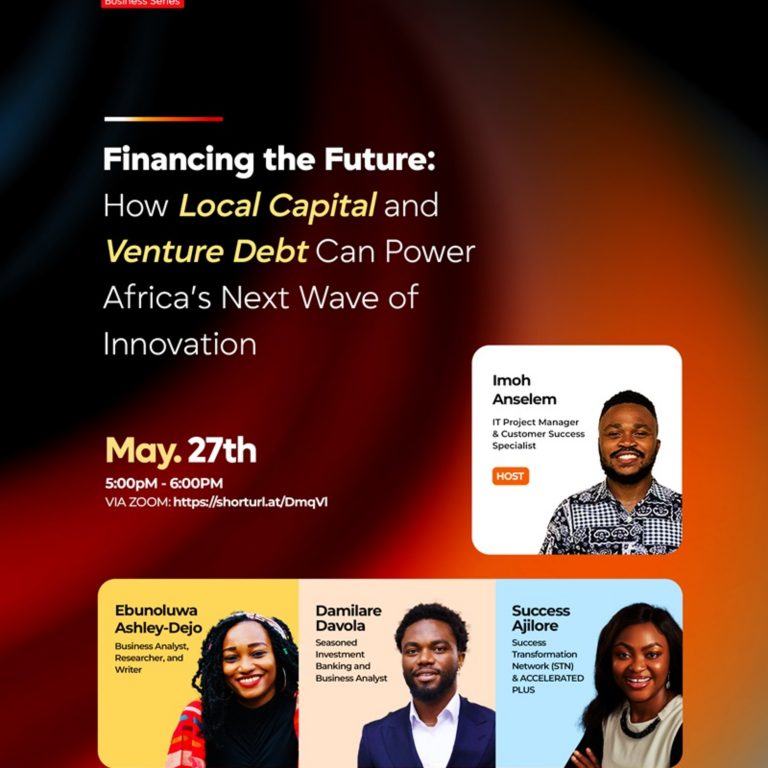
Financing the Future: Venture Debt, Local Capital & African Innovation | TBS May 2026 Webinar
byTecheconomy

Africa’s innovation ecosystem is evolving, but where will the funding for the next generation of startups come from?

In this edition of the Techeconomy Business Series (TBS) May 2026, industry experts explore how local capital, venture debt, and smarter investment structures are redefining startup growth and innovation across Africa.

🎙️ Featured Speakers:

* Ebunoluwa Ashley-Dejo

* Damilare Davola

* Success Ajilore (STN & Accelerated Plus)

Key conversations in this webinar include:

✔️ The future of startup financing in Africa

✔️ Venture debt and alternative funding models

✔️ The role of local investors in scaling innovation

✔️ Sustainable investment strategies for African startups

✔️ Opportunities and challenges in the African tech ecosystem

Subscribe for more conversations shaping Africa’s digital economy and innovation landscape.

#TBS2026 #AfricanInnovation #VentureDebt #StartupFinance #TechInAfrica #Techeconomy #AfricanStartups #InnovationEconomy

Financing the Future: Venture Debt, Local Capital & African Innovation | TBS May 2026 Webinar
May 27, 2026
Techeconomy
PROTECTING INNOVATION IN AFRICA’S STARTUP ECOSYSTEM
April 29, 2026
Techeconomy
BUILDING TRUST IN AFRICA ECOSYSTEM
February 27, 2026
Techeconomy
Navigating a Career in Tech Sales
January 29, 2026
Techeconomy
How Technology is Transforming Education, Health, and Business
November 27, 2025
Techeconomy
Search Results placeholder
MTN Live It 100 Thematic Campaign
ADVERTISEMENT
  • About Us
  • Careers
  • Contact Us
  • Privacy Policy

© 2026 TECHECONOMY.

No Result
View All Result
  • Technology
  • Business
  • Economy
  • Features
  • Editorial
  • Brand Content
  • TECHECONOMY TV

© 2026 TECHECONOMY.

This website uses cookies. By continuing to use this website you are giving consent to cookies being used. Visit our Privacy and Cookie Policy.