


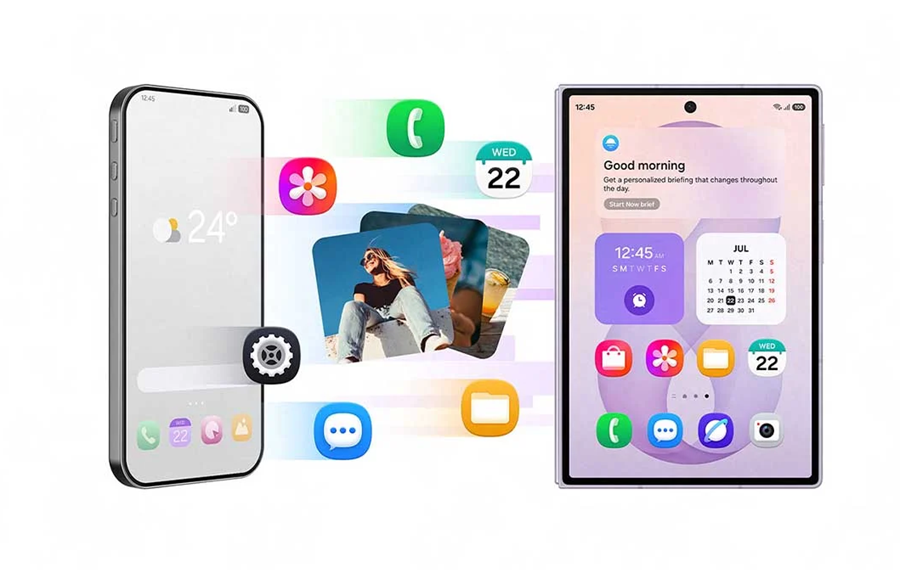
The Galaxy Unpacked event, held on July 22, was not be just about Samsung’s latest foldable smartphones.
The first Galaxy Unpacked event of 2026, held in February, marked Samsung’s transition towards more agentic, personalised and adaptive AI experiences across its devices. It also introduced the Galaxy S26 series, the world’s first smartphone lineup powered by a 2nm chipset.
While the spotlight was on the company’s latest foldables, Samsung also unveiled more than just new hardware.
One UI 9 Official Release
Samsung officially released One UI 9 alongside the newest additions to the Galaxy Z Fold and Galaxy Z Flip lineup.
The announcement may come as a surprise because One UI 8.5 was released only two months ago, on May 6, and is still rolling out to eligible older Galaxy devices.
Samsung appears keen to ensure its latest foldables ship with its newest technologies, from the software and chipset to the updated foldable design.
One UI 9 debuted pre-installed on the Galaxy Z Fold 8, Galaxy Z Fold 8 Ultra and Galaxy Z Flip 8. Meanwhile, the beta programme has been available since May for the Galaxy S26 series.
Based on feedback from beta users, One UI 9 is not expected to introduce major visual changes. Samsung had already delivered most of those refinements with One UI 8.5.
Instead, the new software is expected to focus on agentic AI-powered personalisation, improved multitasking features and further refinements to Samsung’s premium user experience.
As for availability, Galaxy A series users may have to wait longer. Samsung rolled out One UI 9 first to eligible Galaxy S series devices, depending on the region, while supported Galaxy A models are likely to receive the update towards the end of 2026 or early 2027.
The Galaxy Unpacked event held simultaneously across the globe generated strong interest in Samsung’s foldable lineup, with a redesigned book-style form factor and an almost crease-free display.
Although the release of One UI 9 comes only months after One UI 8.5, the update aligns with Samsung’s latest foldables and the company’s continued focus on AI-first mobile computing.



