


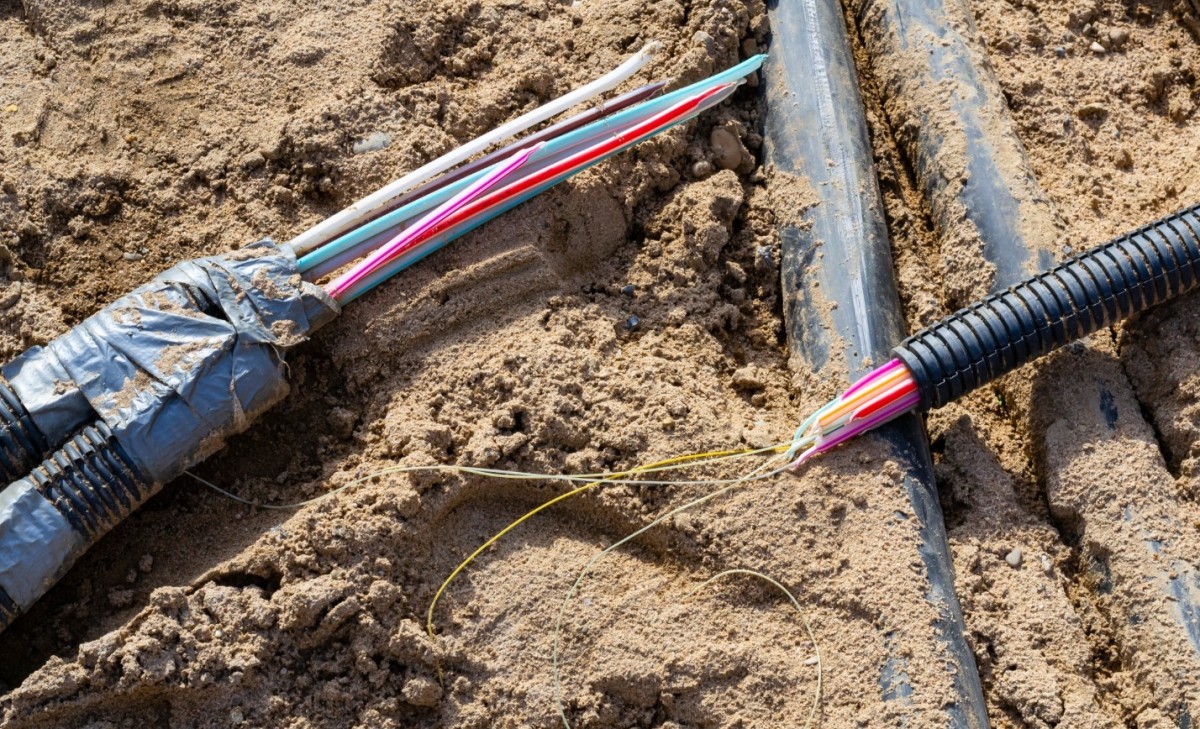
Nigeria’s telecommunications sector recorded 5,934 fibre optic cables cuts between January and March 2026, with the highest incidents concentrated in a handful of economically strategic states, raising fresh concerns over network reliability, digital economy growth, and the urgent need to strengthen Critical National Information Infrastructure (CNII) protection.
Techeconomy analysis of outage reports from the Nigerian Communications Commission (NCC) network monitoring portal shows that Abuja (FCT), Lagos, Rivers, Kano, Kaduna, Enugu, Borno, Anambra, Ogun and Akwa Ibom emerged among the states with the highest fibre-related network disruptions during the first quarter of the year.
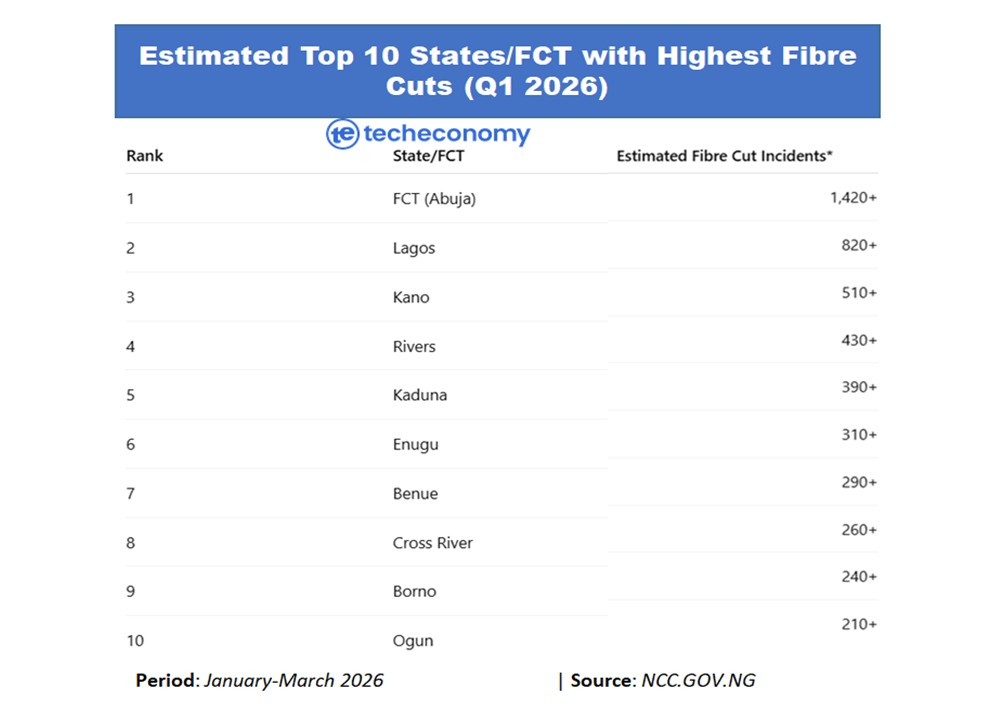
The incidents, averaging about 65 fibre cuts daily nationwide, disrupted mobile services, broadband connectivity, enterprise operations, fintech transactions, cloud services and digital communications relied upon by millions of Nigerians.
Industry stakeholders say the trend highlights the growing vulnerability of Nigeria’s telecom backbone infrastructure at a time the country is aggressively pursuing broadband expansion, digital payments, e-government services, artificial intelligence adoption and wider digital transformation.
Lagos, Abuja Lead Fibre Cut Incidents
Lagos and the Federal Capital Territory remained among the worst-hit locations largely due to intensive road construction, urban infrastructure projects, cable vandalism and repeated excavation activities damaging underground fibre infrastructure.
Several telecom operators including MTN Nigeria, Airtel Nigeria, FibreOne, Tizeti, Layer3 and Broadband Communications Network (BCN) reported multiple outages linked to fibre cuts in the two cities during the quarter.
For operators, the challenge is particularly severe because Lagos and Abuja account for a substantial share of Nigeria’s enterprise connectivity, banking infrastructure, cloud services, data traffic and digital business activities.
Industry analysts warn that recurring disruptions in both locations have broader implications for Nigeria’s financial system, digital commerce ecosystem and investor confidence.
Northern States Also Hit
Kano, Kaduna and Borno recorded significant fibre-related disruptions during the period, affecting both consumer connectivity and enterprise services.
Operators attributed many of the incidents to construction activities, infrastructure vandalism, environmental factors and operational challenges in maintaining long-distance fibre routes.
The repeated outages in northern corridors also expose the fragile nature of intercity fibre transmission infrastructure critical for nationwide network resilience.
South-East, South-South Networks Under Pressure
Enugu, Anambra, Rivers and Akwa Ibom also witnessed multiple fibre cuts affecting voice and internet services.
The outages disrupted connectivity for businesses, schools, government institutions and digital service providers operating within the regions.
Industry sources say the growing dependence on digital services means fibre cuts now carry wider economic consequences beyond ordinary telecom disruptions.
The Real Cost of Fibre Cuts
For consumers, the impact often appears as dropped calls, poor internet speeds, failed banking transactions and unstable connectivity.
But for the broader economy, the consequences are far more significant.
Every major fibre cut affects banking systems, ATMs, Point-of-Sale terminals, fintech applications, logistics platforms, hospitals, educational systems, cloud infrastructure and enterprise communications.
As Nigeria’s economy becomes increasingly digitised, network downtime now directly translates into productivity losses, operational delays and revenue disruptions.
Telecom operators are also spending billions of naira annually repairing damaged fibre cables and restoring affected sites, costs that analysts say could otherwise support rural broadband rollout, 5G deployment and network expansion projects.
Why NCC’s CNI Push Matters
The growing scale of fibre cuts is strengthening industry support for the NCC’s Critical National Information Infrastructure protection drive.
President Bola Tinubu had earlier signed an Executive Order designating telecommunications infrastructure as Critical National Information Infrastructure (CNII), effectively classifying telecom assets as nationally strategic infrastructure deserving stronger legal protection.
The designation was expected to reduce vandalism, improve coordination around infrastructure projects and strengthen enforcement against negligent destruction of telecom facilities.
However, operators argue that implementation remains weak, especially during road construction projects where fibre cables are frequently damaged by contractors and excavation activities.
Industry executives say many state governments and contractors still fail to properly coordinate with telecom operators before embarking on major infrastructure works.
Threat to Nigeria’s Digital Economy
The fibre cuts crisis comes at a delicate period for Nigeria’s digital economy ambitions.
The Federal Government continues to promote broadband penetration, digital identity systems, fintech growth, cloud computing, AI innovation and e-government services, all heavily dependent on reliable telecom infrastructure.
Analysts warn that unless stronger infrastructure protection measures are enforced, Nigeria risks undermining its digital transformation goals.
The disruptions also raise concerns for sectors increasingly dependent on stable connectivity, including financial services, healthcare, education, e-commerce, logistics and media.
For telecom operators already battling forex volatility, inflation, diesel costs and rising capital expenditure requirements, repeated fibre cuts are becoming both an operational and financial burden.
Industry Pushes for Stronger Enforcement
Telecom stakeholders are now advocating stricter enforcement of CNII protection laws, improved coordination between construction agencies and network operators, adoption of “dig-once” policies and stiffer penalties for vandalism and negligent fibre damage.
Experts say protecting fibre infrastructure must now become a national economic priority, not just a telecom industry concern.
As Nigeria positions itself as Africa’s largest digital economy, the reliability of its telecom infrastructure may ultimately determine how successfully the country can compete in an increasingly connected global economy.



