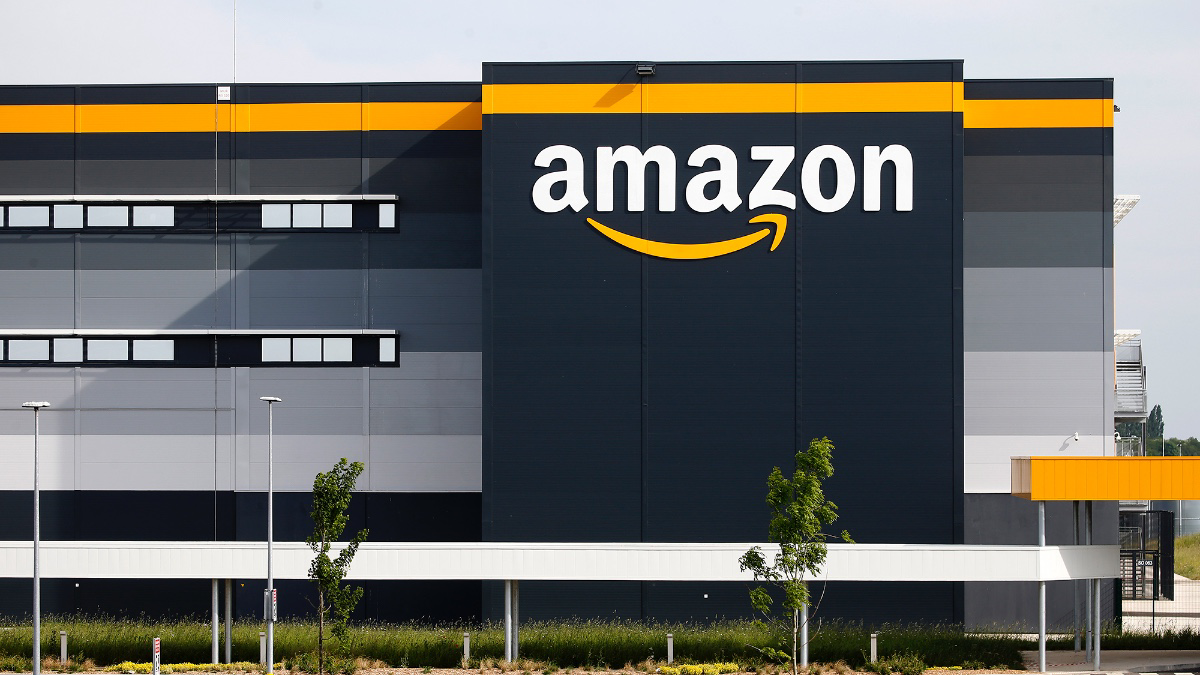
Shares of U.S. delivery and logistics firms fell sharply after Amazon unveiled its expansion into third-party supply chain services.
FedEx dropped as much as 7.4% during trading, its steepest fall in over a year, while UPS followed, sliding up to 8.9%.
Forward Air and GXO Logistics both recorded double-digit declines, while Old Dominion Freight Line fell more than 5%.
The reaction came within hours after Amazon announced that it would open its logistics network to businesses beyond its marketplace.
With such a wide scope, the company plans to offer freight, warehousing, fulfilment and parcel delivery as a single service to external clients.
Amazon has spent years building warehouses, delivery stations and air capacity to speed up its own orders. Now, it wants to use spare capacity to move goods for other companies, even when those goods have nothing to do with its retail platform.
In practical terms, this puts Amazon in direct competition with long-established carriers. It also stretches into areas handled by freight brokers, warehouse operators and trucking firms.
The market reaction shows how seriously investors are taking that risk.
Amazon said customers could range from industrial groups like 3M to retailers such as Lands’ End, showing it is not targeting a niche. Rather, it is going after the expansive logistics market.
Morgan Stanley analyst Ravi Shanker wrote, “The announcement could be a watershed moment for North American freight transportation companies.”
Others see a longer build-up behind this move. Nate Skiver, founder of LPF Spend Management, said, “Amazon has been heading in this direction for several years, offering portions of its supply chain capabilities as services to non-Amazon sellers.”
He added, “Bringing its end-to-end capabilities to market in a unified service offering stands to disrupt the US logistics market.”
The issue is not just about parcel delivery, as air freight firms, trucking companies and even rail and ocean shipping operators could feel the pressure if Amazon scales quickly.
Its advantage lies in adequate management, as it owns large parts of the network, from storage to last-mile delivery.
Competitors are facing a company with deep pockets, existing infrastructure and a track record of cutting delivery times. Investors responded fast, and the sell-off reveals that.
However, Amazon still needs to prove it can run this as a standalone service at scale.