


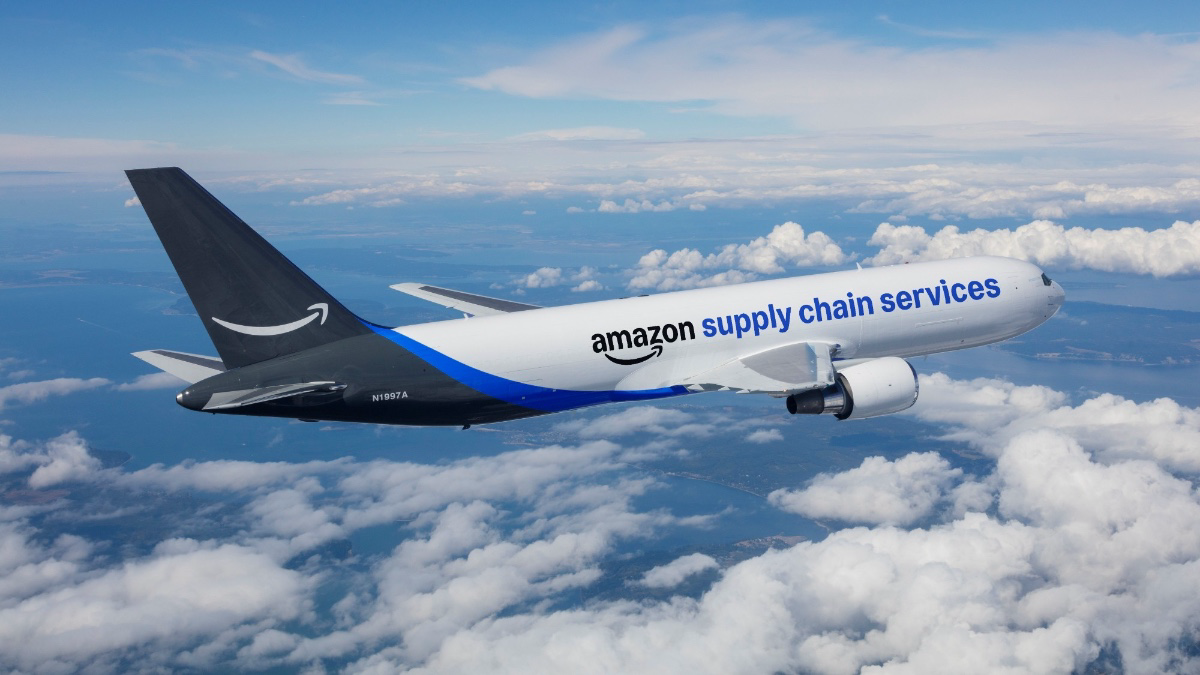
Amazon has launched a new logistics service called Amazon Supply Chain Services, opening its freight, warehousing, and delivery network to outside companies for the first time at this scale.
The company said businesses will now be able to move, store, and deliver goods using its existing supply chain systems, including ocean freight, air transport, ground haulage, warehousing, and parcel delivery. The service is available to firms across sectors, such as retail, healthcare, automotive, and manufacturing.
Amazon described the rollout as an expansion of tools it has already been using internally and with third-party sellers for years. It pointed to its Fulfilment by Amazon system, which has supported independent sellers since 2006. Those sellers have shipped more than 80 billion units through Amazon’s network.
Over time, Amazon added more logistics functions beyond fulfilment centres. That includes cross-border shipping, customs handling, and bulk storage. The company said it now moves billions of items annually for selling partners.
Peter Larsen, vice president of Amazon Supply Chain Services, said the system builds on long-term infrastructure investment.
“Amazon is bringing the infrastructure, intelligence, and scale of its supply chain services, proven over decades, to businesses everywhere, much like Amazon Web Services did for cloud computing,” he said.
“Supply chain wasn’t just a function at Amazon, it was core to providing an exceptional shopping experience. Our differentiator. The reason we could offer fast, dependable delivery that nobody else could.
“And with the launch of ASCS, we’re confident we can give any other business access to the same cost efficiency, reliability, and speed that we’ve built for Amazon customers.”
Several large companies are already testing the service, including Procter & Gamble, using Amazon’s freight network to move raw materials and finished goods across its operations.
3M is also using the system to transport products from factories to distribution centres worldwide, while Lands’ End said it is using Amazon’s unified inventory system to manage orders across multiple sales channels.
Again, American Eagle Outfitters is using Amazon’s parcel delivery network for online orders across its brands.
Andrew McLean, chief executive of Lands’ End, said the system improves delivery timing for customers.
“Amazon is one of our key ecommerce partners, and we’re excited to leverage Amazon Supply Chain Services to position inventory closer to customers so we can reach them even faster,” he said.
“This consistency is central to our solutions-based approach, enabling us to serve customers with confidence and agility, especially during peak seasons.”
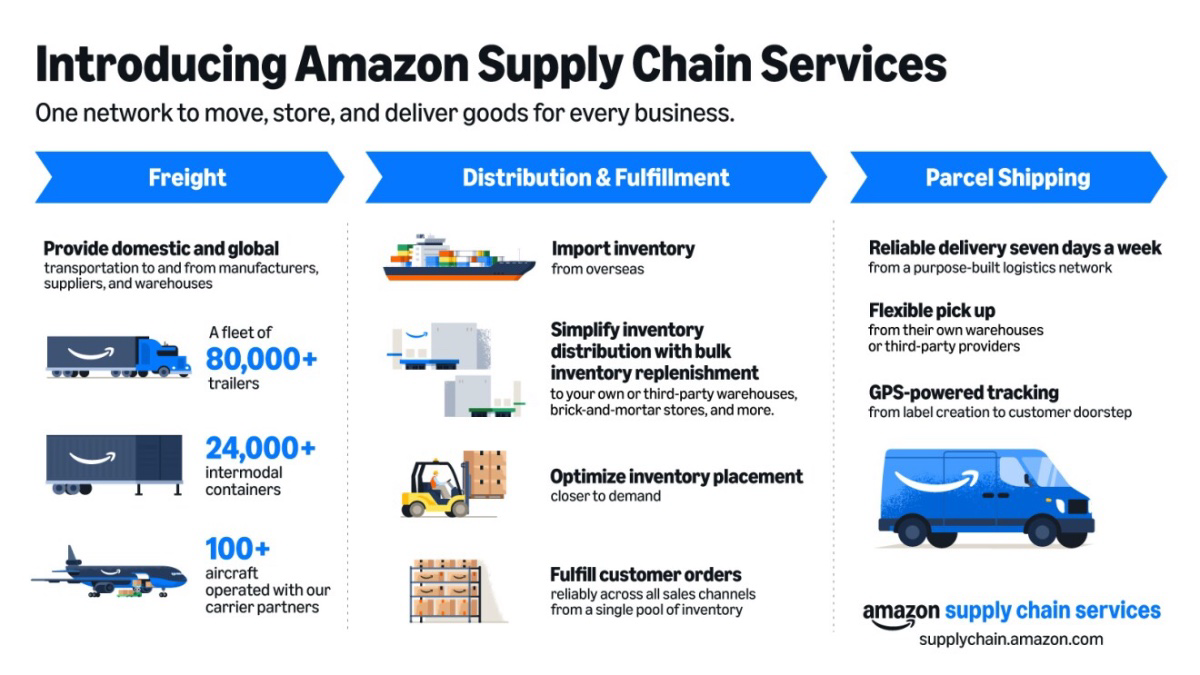
Amazon said the system is built around three main services, which are freight transport, inventory distribution, and parcel delivery.
Freight covers movement by air, sea, road, and rail, with tracking and customs support included. Distribution allows companies to store stock closer to demand and fulfil orders across different sales channels.
Parcel delivery provides nationwide shipping with two to five-day delivery windows, including weekend operations.
The company further noted that businesses will also get access to a central platform to manage services and shipments.
Amazon also highlighted early results from sellers already using its logistics tools, saying some businesses recorded higher sales after integrating supply chain services, alongside lower operating costs.
Independent sellers are a big part of Amazon’s logistics network. They now move billions of products each year through its system, supported by fulfilment centres and transport operations across regions.
Some sellers said the expansion reduces operational pressure. One business founder said:
“Amazon has added value at every stage of our supply chain from cross-border logistics to warehouse storage and parcel shipping,” said Todd Bairstow, founder of Finer Form.
“We’ve been able to save money, eliminate operational complexity, and it’s given us more time to focus on what matters: building our brand. Honestly, there wouldn’t be a Finer Form without Amazon.”
Amazon said the new service builds on the same infrastructure it developed for its own retail operations, adding that it now wants to make that system available to any business, not just those selling on its marketplace.



