

ADVERTISEMENT
Thursday, April 30, 2026
Tech | Business | Economy
No Result
View All Result
  • Technology
    • Trends
    • Telecoms
      • Broadband
    • ConsumerTech
      • Gadgets and Appliances
      • Apps
      • Accessories
      • Reviews
      • Unboxing
    • EnterpriseTECH
    • Security & Data Protection
    • How To
    • GameTech
  • Business
    • Company News
    • StartUPs
      • Founder’s Story
      • Funding
    • Deals
    • People & Moves
    • SME & Entrepreneur Focus
    • BUSINESS SENSE FOR SMEs
    • Competition & Market Positioning
    • Commerce & Mobility
    • Travel
    • WomenPreneurs
  • Economy
    • Macroeconomic Trends
      • Macro Monday
      • TE Insights
    • Finance
      • Banks
      • Fintech
      • Insurance
      • Digital Assets
      • Personal Finance
    • Policies
      • Tech & Society
    • Market Analysis
    • Jobs & Workforce Economy
  • Features
    • Guest Writer
      • Chidiverse
      • Digital Assets
    • EventDIARY
    • IndustryINFLUENCERS
    • MarkTECH
    • TBS
    • NewsEXTRA
  • Editorial
  • Brand Content
  • TECHECONOMY TV
Thursday, April 30, 2026
Tech | Business | Economy
No Result
View All Result
Tech | Business | Economy
No Result
View All Result

Home » Black Friday Report shows banking Credentials Theft doubled in 2022

Black Friday Report shows banking Credentials Theft doubled in 2022

Admin by Admin
November 26, 2022
in Security & Data Protection
Reading Time: 3 mins read
0
Black Friday scam - photo by maxresdefault

Black Friday scam - photo by maxresdefault

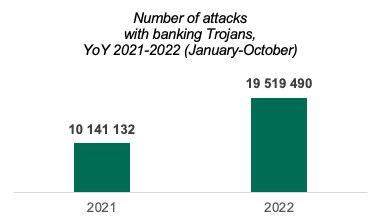
Thursday, 24 November 2022; Kaspersky researchers reported that the number of attacks via Banking Trojans stealing payment data doubled in 2022 when compared with 2021, reaching almost 20 million attacks.

This year, in addition to this active campaign of banking credentials theft, cybercriminals did not stand still and developed new scam schemes.

Ahead of Black Friday in particular, fraudsters used a new type of phishing scheme for the first time exploiting Buy Now Pay Later (BNPL) services.

These are some of the findings from Kaspersky’s ‘How customers got scammed amid the Black Friday season in 2022’ report aimed at educating users on staying safe during the sales season.

Banking Trojans are widely used tools in the arsenal of cybercriminals profiting from the sales season. Once the user browses in an online store, the Trojan saves all the data the user enters into the website’s forms.

Subscribe to our Telegram channel for the latest updates.

Follow the latest developments with instant alerts on breaking news, top stories, and trending headlines.

Join Channel

This means cybercriminals get access to a credit or debit card number, expiration date and CVV, and the victim’s site login credentials. Having obtained this information, the attackers may use it to empty the user’s bank account, use their card details for purchases or sell the data in the Dark web stores.

After a rapid drop in the number of attacks with banking Trojans in 2021, cybercriminals have returned to this type of threat with renewed strength. In 2022, the number of attacks doubled compared to the same time period in 2021.

From January to October, Kaspersky products detected and prevented almost 20 million attacks, meaning that the overall growth in the number of detections is 92%.
Black Friday
Black Friday scams (Source: Kaspersky)

The sales season inevitably attracts the attention of shoppers and retailers. However, it is also a favorite time for cybercriminals, who do not hesitate to cash in on online customers.

Cybercriminals create juicy offers that are fake and expire quickly, so the user must hurry to get the goods for free or at the lowest price.

This is where cybercriminals catch customers, who are hungry for freebies and don’t look carefully at the site they are entering their data into: the phishing or the original one.

In 2022, Kaspersky experts also found numerous examples of phishing pages for the first time abusing BNPL services.

These tools allow customers to split the cost of the purchase into several interest-free installments. Therefore, these services appeal to consumers, especially youngsters, and have proven to be particularly popular during shopping periods such as Black Friday.

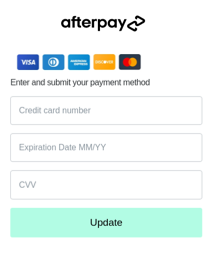
An example of this scam is the misuse of a popular service named Afterpay (Clearpay in the U.K. and Italy), with 20 million active users across the world. Perpetrators set up a page mimicking the official website, tricking unsuspecting victims into entering their credit card numbers and CVVs into a fake form.

After the user has entered their details, cybercriminals will try to steal as much money as possible from this card, emptying the victim’s wallet.
Black Friday
The phishing page mimicking Afterpay is aimed at gaining access to a potential victim’s account

“The shopping event of the year – Black Friday – is a hot time not only for sellers and their buyers, but also for scammers who want to steal as much money as possible from hurried customers. The new scheme exploiting Buy Now Pay Later (BNPL) services only proves that cybercriminals do not stop in their desire to attack victims and come up with new methods to do so. On ordinary days the customer can easily understand: if the product is too cheap, it’s most likely a scam, but during the Black Friday sales period this fact isn’t so clear. Shoppers become less vigilant and are therefore an easy target for cybercriminals. That’s why it’s so important to pay attention to which site you buy from, be careful with unfamiliar companies and use a reliable security solution,” comments Olga Svistunova, security expert at Kaspersky.


0Shares

Previous Post

Furex Technologies Set to Launch P2P Platform

Next Post

Spectrum Auction Will Democratize Broadband for Nigerians – Danbatta

Admin

Admin

TechEconomy is a Distinct News Media That Focuses on BUSINESSES, PEOPLE, PLATFORMS, INSTITUTIONS

Related Posts

Oluwole Asalu on data and privacy, Personalisation and AI | infrastructure in Nigeria | Nigeria digital defences

Why Nigeria’s Digital Defences Must Evolve or Risk Being Overwhelmed

April 30, 2026
Dr Vincent Olatunji - Nigeria Data Protection Commission - NDPC speaks on DPCOs | Nigeria records cyber attacks

Nigeria Records 4,000 Weekly Attacks amid $10.5tn Global Cybercrime – Olatunji

April 30, 2026

DG NITDA Calls for Urgent Action on AI-Driven Cyber Threats

April 23, 2026
Load More
Next Post
BJAN - Spectrum Auction Will Democratize Broadband

Spectrum Auction Will Democratize Broadband for Nigerians - Danbatta

Leave a Reply Cancel reply

Your email address will not be published. Required fields are marked *

I agree to the Terms & Conditions and Privacy Policy.

This site uses Akismet to reduce spam. Learn how your comment data is processed.

Techeconomy Podcast
Techeconomy Podcast

The Techeconomy Podcast is a thought-leadership show exploring the powerful intersection of technology, business, and the economy, with a strong focus on Africa’s fast-evolving digital landscape.

PROTECTING INNOVATION IN AFRICA’S STARTUP ECOSYSTEM
byTecheconomy

Protecting Innovation in Africa’s Startup Ecosystem . A timely conversation for the future of African entrepreneurship.

PROTECTING INNOVATION IN AFRICA’S STARTUP ECOSYSTEM
April 29, 2026
Techeconomy
BUILDING TRUST IN AFRICA ECOSYSTEM
February 27, 2026
Techeconomy
Navigating a Career in Tech Sales
January 29, 2026
Techeconomy
How Technology is Transforming Education, Health, and Business
November 27, 2025
Techeconomy
INNOVATION IN MOBILE BANKING
October 30, 2025
Techeconomy
Search Results placeholder
  • About Us
  • Careers
  • Contact Us
  • Privacy Policy

© 2026 TECHECONOMY.

No Result
View All Result
  • Technology
  • Business
  • Economy
  • Features
  • Editorial
  • Brand Content
  • TECHECONOMY TV

© 2026 TECHECONOMY.

This website uses cookies. By continuing to use this website you are giving consent to cookies being used. Visit our Privacy and Cookie Policy.

