

ADVERTISEMENT
Sunday, May 31, 2026
Tech | Business | Economy
No Result
View All Result
  • Technology
    • Trends
    • Telecoms
      • Broadband
    • ConsumerTech
      • Gadgets and Appliances
      • Apps
      • Accessories
      • Reviews
      • Unboxing
    • EnterpriseTECH
    • Security & Data Protection
    • How To
  • Business
    • Company News
    • StartUPs
      • Founder’s Story
      • Funding
    • Deals
    • People & Moves
    • SME & Entrepreneur Focus
    • BUSINESS SENSE FOR SMEs
    • Competition & Market Positioning
    • Commerce & Mobility
    • Travel
    • WomenPreneurs
  • Economy
    • Macroeconomic Trends
      • Macro Monday
      • TE Insights
    • Finance
      • Banks
      • Fintech
      • Insurance
      • Digital Assets
      • Personal Finance
    • Policies
      • Tech & Society
    • Market Analysis
    • Jobs & Workforce Economy
  • Features
    • Guest Writer
      • Chidiverse
      • Digital Assets
      • GameTech
    • EventDIARY
    • IndustryINFLUENCERS
    • MarkTECH
    • TBS
    • NewsEXTRA
  • Editorial
  • Brand Content
  • TECHECONOMY TV
Sunday, May 31, 2026
Tech | Business | Economy
No Result
View All Result
Tech | Business | Economy
No Result
View All Result

Home » Canvas Breach Raises Shared Infrastructure Questions

Canvas Breach Raises Shared Infrastructure Questions

The breach temporarily left students and faculty at thousands of U.S. colleges without access to course materials

Peter Oluka by Peter Oluka
May 11, 2026
in Security & Data Protection
Reading Time: 2 mins read
0
Canvas breach and the way forward

Image Credit: NPR/Google

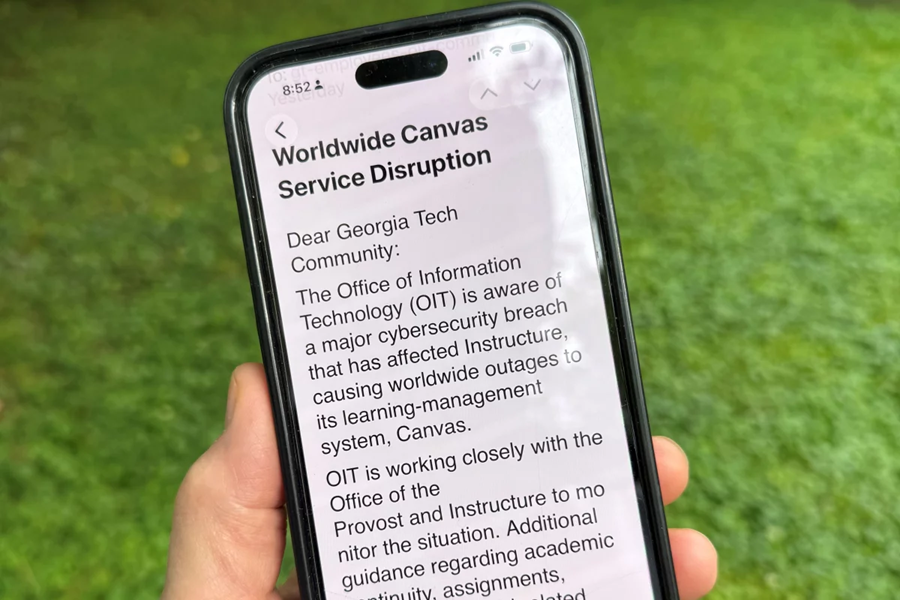
Canvas, an e-learning platform went offline after a data breach last week, raising probing questions on the safety of shared infrastructures.

The breach temporarily left students and faculty at thousands of U.S. colleges, and K-12 schools, without access to course materials and communications during finals period.

“I’m sure somewhere in the country when the outage happened, there probably were people actually taking final exams on the platform when it crashed,” says Damon Linker, a senior lecturer in political science at the University of Pennsylvania.

Thirty million users, including at half of the higher education institutions in North America, rely on Canvas to manage courses, submit assignments, view grades and facilitate communication, according to its parent company, Instructure.

But when Linker and many other users tried to do so on Thursday afternoon, they met a black screen and a warning message.

Subscribe to our Telegram channel for the latest updates.

Follow the latest developments with instant alerts on breaking news, top stories, and trending headlines.

Join Channel

“ShinyHunters has breached Instructure (again),” it read. “Instead of contacting us to resolve it they ignored us and did some ‘security patches.'”

ShinyHunters is the same entity that took credit for a massive Ticketmaster data breach in 2024. Like many such groups, it’s a cluster of young people working remotely together, “kind of like a ransomware gang,” says Rachel Tobac, the CEO of SocialProof Security, which trains people and companies to defend themselves against hackers.

ShinyHunters wrote on a threat intelligence website earlier last week that the initial breach involved data, including private messages, from 275 million students, teachers and staff at nearly 9,000 schools worldwide.

The group said Thursday that affected schools can prevent the release of their data by consulting with cyber advisory firms and negotiating settlements through the encrypted chat platform Tox.

“You have till the end of the day by 12 May 2026 before everything is leaked,” the hackers wrote.

ProCircular, a top Midwest cybersecurity consulting company, has been closely monitoring the breach and has created a Github link for Canvas breach customer lookup.

“The Canvas breach is a reminder that shared infrastructure risk is institutional risk. When a platform serving 41% of North American higher education is compromised, every tenant becomes a potential extortion target, regardless of their own security posture. We saw this play out after the PowerSchool incident in 2024, and we expect the same pattern here.

This moment calls for institutions to stop treating third-party SaaS platforms as someone else’s problem. Credential rotation at the vendor level does not eliminate persistence mechanisms inside your own tenant, and a ransom payment has never guaranteed data deletion. The path forward is proactive auditing, pre-established incident response protocols, and a firm organizational stance against negotiation before a threat ever arrives.” – Brandon Blankenship, ProCircular, wrote in a message to Techeconomy.


0Shares
MTN Live It 100 Thematic Campaign
Previous Post

Chromebooks Hit Hardest as Tablet Market Grows Just 0.1% in Q1 2026

Next Post

Why Innovation is Now the Price of Staying in Business

Peter Oluka

Peter Oluka

Peter Oluka (@peterolukai), editor of Techeconomy, is a multi-award winner practicing Journalist. Peter’s media practice cuts across Media Relations | Marketing| Advertising, other Communications interests. Contact: peter.oluka@techeconomy.ng

Related Posts

Africa Physical Security market | CCTV

Genetec: Africa’s Security Infrastructure Has Entered Major Transformation Phase

May 28, 2026
Chimezie Emewulu Seamfix | Digital Identity

From His Father’s Kidnapping to 100 Million Identities: Seamfix CEO on Driving Africa’s Digital Trust Revolution

May 28, 2026

How Smart Glasses are Rewriting the Rules of Consent in South Africa

May 27, 2026
Load More
Next Post
business builds a culture of innovation

Why Innovation is Now the Price of Staying in Business

Leave a Reply Cancel reply

Your email address will not be published. Required fields are marked *

I agree to the Terms & Conditions and Privacy Policy.

This site uses Akismet to reduce spam. Learn how your comment data is processed.

Techeconomy Podcast
Techeconomy Podcast

The Techeconomy Podcast is a thought-leadership show exploring the powerful intersection of technology, business, and the economy, with a strong focus on Africa’s fast-evolving digital landscape.

Financing the Future: Venture Debt, Local Capital & African Innovation | TBS May 2026 Webinar
byTecheconomy

Africa’s innovation ecosystem is evolving, but where will the funding for the next generation of startups come from?

In this edition of the Techeconomy Business Series (TBS) May 2026, industry experts explore how local capital, venture debt, and smarter investment structures are redefining startup growth and innovation across Africa.

🎙️ Featured Speakers:

* Ebunoluwa Ashley-Dejo

* Damilare Davola

* Success Ajilore (STN & Accelerated Plus)

Key conversations in this webinar include:

✔️ The future of startup financing in Africa

✔️ Venture debt and alternative funding models

✔️ The role of local investors in scaling innovation

✔️ Sustainable investment strategies for African startups

✔️ Opportunities and challenges in the African tech ecosystem

Subscribe for more conversations shaping Africa’s digital economy and innovation landscape.

#TBS2026 #AfricanInnovation #VentureDebt #StartupFinance #TechInAfrica #Techeconomy #AfricanStartups #InnovationEconomy

Financing the Future: Venture Debt, Local Capital & African Innovation | TBS May 2026 Webinar
May 27, 2026
Techeconomy
PROTECTING INNOVATION IN AFRICA’S STARTUP ECOSYSTEM
April 29, 2026
Techeconomy
BUILDING TRUST IN AFRICA ECOSYSTEM
February 27, 2026
Techeconomy
Navigating a Career in Tech Sales
January 29, 2026
Techeconomy
How Technology is Transforming Education, Health, and Business
November 27, 2025
Techeconomy
Search Results placeholder
MTN Live It 100 Thematic Campaign
ADVERTISEMENT
  • About Us
  • Careers
  • Contact Us
  • Privacy Policy

© 2026 TECHECONOMY.

No Result
View All Result
  • Technology
  • Business
  • Economy
  • Features
  • Editorial
  • Brand Content
  • TECHECONOMY TV

© 2026 TECHECONOMY.

This website uses cookies. By continuing to use this website you are giving consent to cookies being used. Visit our Privacy and Cookie Policy.

