

ADVERTISEMENT
Sunday, May 3, 2026
Tech | Business | Economy
No Result
View All Result
  • Technology
    • Trends
    • Telecoms
      • Broadband
    • ConsumerTech
      • Gadgets and Appliances
      • Apps
      • Accessories
      • Reviews
      • Unboxing
    • EnterpriseTECH
    • Security & Data Protection
    • How To
    • GameTech
  • Business
    • Company News
    • StartUPs
      • Founder’s Story
      • Funding
    • Deals
    • People & Moves
    • SME & Entrepreneur Focus
    • BUSINESS SENSE FOR SMEs
    • Competition & Market Positioning
    • Commerce & Mobility
    • Travel
    • WomenPreneurs
  • Economy
    • Macroeconomic Trends
      • Macro Monday
      • TE Insights
    • Finance
      • Banks
      • Fintech
      • Insurance
      • Digital Assets
      • Personal Finance
    • Policies
      • Tech & Society
    • Market Analysis
    • Jobs & Workforce Economy
  • Features
    • Guest Writer
      • Chidiverse
      • Digital Assets
    • EventDIARY
    • IndustryINFLUENCERS
    • MarkTECH
    • TBS
    • NewsEXTRA
  • Editorial
  • Brand Content
  • TECHECONOMY TV
Sunday, May 3, 2026
Tech | Business | Economy
No Result
View All Result
Tech | Business | Economy
No Result
View All Result

Home » [JUST IN] CBN Floats Exchange Rate: What are the Implications?

[JUST IN] CBN Floats Exchange Rate: What are the Implications?

Justice Godfrey Okamgba by Justice Godfrey Okamgba
June 14, 2023
in Finance
Reading Time: 2 mins read
1
CBN Issues New Guidelines

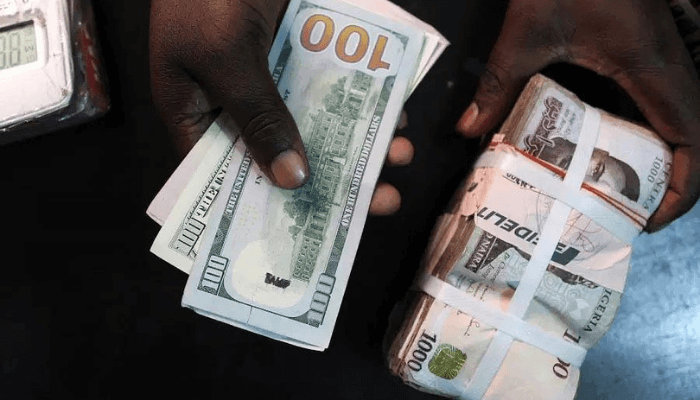
Naira - Dollar

The Nigerian Naira has recently undergone a significant devaluation, with the currency trading at N750-N755 per dollar at the investors and exporters (I&E) window.

This devaluation is a result of the Central Bank of Nigeria’s (CBN) directive to commercial banks, Wednesday, allowing them to freely sell foreign exchange (forex) at market-determined rates. This move signifies the adoption of a free-floating or flexible exchange rate regime.

Under this policy, the CBN grants banks the permission to sell dollars at any rate, effectively removing or relaxing the restrictions on the currency’s exchange rate.

Earlier, after the inauguration of President Bola Tinubu, a media outlet reported that the Naira had been devalued to N631 per dollar from N461.6, highlighting the recent volatility in the currency’s value. However, the CBN issued a statement refuting these reports.

The devaluation aligns with President Bola Ahmed Tinubu’s announcement of the government’s intention to unify the country’s exchange rate in order to stimulate economic growth.

Implications

According to analysts, the exchange rate of the Naira will now be determined by the forces of supply and demand in the foreign exchange market. This means that banks will have the freedom to set their own exchange rates based on market conditions and competition.

Subscribe to our Telegram channel for the latest updates.

Follow the latest developments with instant alerts on breaking news, top stories, and trending headlines.

Join Channel

However, there is a possibility of increased volatility resulting from fluctuations in supply and demand, as well as market sentiment and economic factors. These fluctuations can cause the exchange rate to rapidly fluctuate, impacting businesses, investors, and consumers involved in international trade or holding foreign currency assets.

A freely floating exchange rate can also affect a country’s balance of trade. If the currency depreciates significantly, it can make exports cheaper and more competitive, potentially benefiting the country’s export sector. Conversely, it can make imports more expensive, leading to higher costs for imported goods and inflationary pressures.

Furthermore, this policy change may attract speculative capital flows. Investors may engage in currency speculation, seeking to profit from short-term fluctuations in exchange rates. This can introduce additional volatility to the foreign exchange market.


0Shares

Previous Post

A Call for the Regulation of the Nigerian Media Monitoring and Intelligence Industry

Next Post

EFCC Hints How Cybercriminals Exploit FinTech Coys Vulnerabilities

Justice Godfrey Okamgba

Justice Godfrey Okamgba

Related Posts

Stablecoin Infrastructure

8 Use Cases of Stablecoin Infrastructure in Africa

April 30, 2026
PAFON 3.0: Chika Nwosu PalmPay’s MD Champions Embedded Finance as Key to Africa’s Digital Economy

PAFON 3.0: Chika Nwosu PalmPay’s MD Champions Embedded Finance as Key to Africa’s Digital Economy

April 30, 2026

Prioritise Trust over Speed as Cyber Threats Rise, Obadare Urges Fintech Players at PAFON 3.0

April 29, 2026
Load More
Next Post
FinTech Vulnerabilities

EFCC Hints How Cybercriminals Exploit FinTech Coys Vulnerabilities

Comments 1

  1. Pingback: Airtel Nigeria Loses $151m to FX Unification - TechEconomy

Leave a Reply Cancel reply

Your email address will not be published. Required fields are marked *

I agree to the Terms & Conditions and Privacy Policy.

This site uses Akismet to reduce spam. Learn how your comment data is processed.

Techeconomy Podcast
Techeconomy Podcast

The Techeconomy Podcast is a thought-leadership show exploring the powerful intersection of technology, business, and the economy, with a strong focus on Africa’s fast-evolving digital landscape.

PROTECTING INNOVATION IN AFRICA’S STARTUP ECOSYSTEM
byTecheconomy

Protecting Innovation in Africa’s Startup Ecosystem . A timely conversation for the future of African entrepreneurship.

PROTECTING INNOVATION IN AFRICA’S STARTUP ECOSYSTEM
April 29, 2026
Techeconomy
BUILDING TRUST IN AFRICA ECOSYSTEM
February 27, 2026
Techeconomy
Navigating a Career in Tech Sales
January 29, 2026
Techeconomy
How Technology is Transforming Education, Health, and Business
November 27, 2025
Techeconomy
INNOVATION IN MOBILE BANKING
October 30, 2025
Techeconomy
Search Results placeholder
  • About Us
  • Careers
  • Contact Us
  • Privacy Policy

© 2026 TECHECONOMY.

No Result
View All Result
  • Technology
  • Business
  • Economy
  • Features
  • Editorial
  • Brand Content
  • TECHECONOMY TV

© 2026 TECHECONOMY.

This website uses cookies. By continuing to use this website you are giving consent to cookies being used. Visit our Privacy and Cookie Policy.

