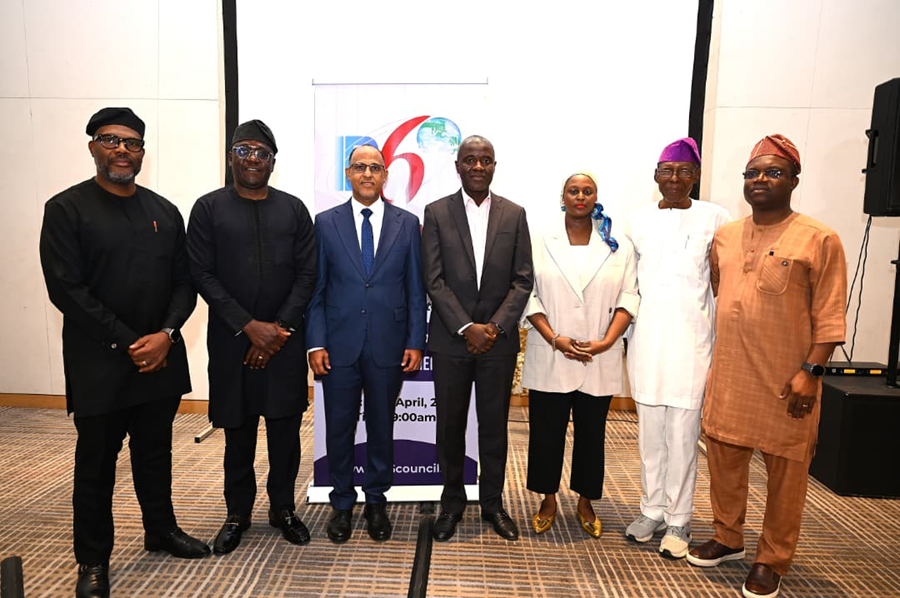
The Nigerian Communications Commission (NCC) has inaugurated the Nigeria IPv6 Council, marking a significant step in the country’s efforts to modernise internet infrastructure, strengthen cybersecurity, and improve its competitiveness in the global digital economy.
Dr. Aminu Maida, the executive vice chairman and chief executive officer of the NCC, announced the initiative during the formal inauguration of the council in Lagos on Thursday, describing it as a strategic milestone in Nigeria’s digital transformation journey.
According to Maida, the establishment of the council signals Nigeria’s intention to play a stronger leadership role in the next evolution of the internet, where speed, scalability, security, and smart connectivity will define economic success.
Nigeria Trails Global IPv6 Adoption
Maida disclosed that Nigeria’s current IPv6 adoption rate stands at approximately five per cent, significantly below the global average, which is above 40 per cent according to industry measurements from global internet analytics platforms such as Google and APNIC.
IPv6, or Internet Protocol version 6, is the latest version of the internet protocol that enables devices to communicate online. It was developed to replace IPv4, whose limited address capacity has become increasingly inadequate in a world driven by smartphones, connected devices, smart cities, cloud computing, and artificial intelligence.
While IPv4 supports about 4.3 billion unique addresses, IPv6 provides an almost unlimited pool of addresses, roughly 340 undecillion addresses, making it critical for the future digital economy.
Maida warned that Nigeria must urgently close the adoption gap.
“IPv6 is no longer optional. It is a strategic necessity for national competitiveness, security, innovation, and economic sovereignty,” he said.
Why IPv6 Matters Now
The NCC boss explained that the rapid growth of 5G networks, the Internet of Things (IoT), data centres, fintech platforms, AI-driven applications, and digital public services is placing increasing pressure on legacy IPv4 systems.
Globally, billions of connected devices are expected to come online over the next few years. Industry forecasts estimate that IoT devices alone could exceed 30 billion worldwide before the end of the decade.
Experts say IPv6 enables more efficient routing, lower network complexity, better end-to-end connectivity, and improved security integration compared with older IPv4 systems.
For Nigeria, Africa’s largest digital market by population and one of the continent’s fastest-growing internet economies, the transition is seen as critical to sustaining long-term digital growth.
Council to Drive National Deployment Strategy
Maida said the newly inaugurated council would coordinate implementation of a National IPv6 Deployment Strategy with clear, measurable timelines.
Its mandate includes positioning Nigeria among Africa’s leading IPv6-enabled countries within the next three years.
The council’s immediate priorities include:
- Establishing a national monitoring and reporting framework with quarterly progress reviews and annual reports
- Promoting professional training and certification for IPv6 engineers
- Driving migration of public sector digital platforms to IPv6-ready systems
- Removing deployment barriers for telecom operators, internet service providers, data centres, banks, and enterprise networks
- Recommending incentives and regulatory measures to accelerate adoption
He stressed that successful migration would require collaboration across regulators, telecom companies, academia, technology communities, and government institutions.
“No single stakeholder can achieve this transition alone,” Maida stated.
NCC Partners AFRINIC, Industry Stakeholders
The NCC also revealed that it has already laid groundwork for migration through strategic partnerships, including collaboration with the African Network Information Centre (AFRINIC), Africa’s regional internet registry responsible for IP address resources.
These partnerships, according to Maida, have supported technical capacity-building programmes across both the public and private sectors.
Operators Yet to Fully Deploy IPv6
Speaking at the event, Muhammed Rudman, chief executive officer of the Internet Exchange Point of Nigeria (IXPN), noted that one of the biggest barriers to migration is the continued usability of IPv4.
He explained that many operators still rely on legacy infrastructure and therefore do not feel immediate pressure to migrate.
According to Rudman, Nigeria has more than 200 Autonomous System Numbers (ASNs) and over 100 networks with IPv6 allocations, yet only a limited number are actively deploying IPv6 services to customers.
“Many operators have IPv6 capability, but it has not been deployed in a meaningful way,” he said.
He added that widespread dependence on Network Address Translation (NAT), a workaround that allows multiple users to share scarce IPv4 addresses, has created issues around performance, traceability, and security.
Targets for 2030
Rudman said the council’s national roadmap sets ambitious but realistic targets, including:
- At least 20% IPv6 compliance across government networks by 2027
- 25% active IPv6 deployment among telecom operators
- Approximately 30% nationwide adoption by 2030
The council also plans to train at least 50 professionals in IPv6 engineering by October through partnerships with universities, training institutions, and regional technical bodies.
He acknowledged that skills shortages remain a challenge, particularly due to migration of trained professionals abroad, making continuous talent development essential.
Digital Sovereignty at Stake
Technology policy expert Chris Uwaje said Nigeria must move beyond dependence on outdated digital systems if it intends to compete in the emerging global technology order.
According to him, IPv6 adoption is not merely a technical upgrade but a national strategic imperative tied to sovereignty, innovation, and domestic capability building.
“This is about building the future internet on Nigeria’s own terms,” Uwaje said.
A Strategic Turning Point
The launch of the Nigeria IPv6 Council comes at a time when nations are increasingly investing in resilient digital infrastructure to support innovation, e-commerce, fintech, smart governance, and cybersecurity.
For Nigeria, analysts say accelerating IPv6 adoption could unlock new efficiencies, strengthen national networks, and better position the country for the next wave of technological advancement.