


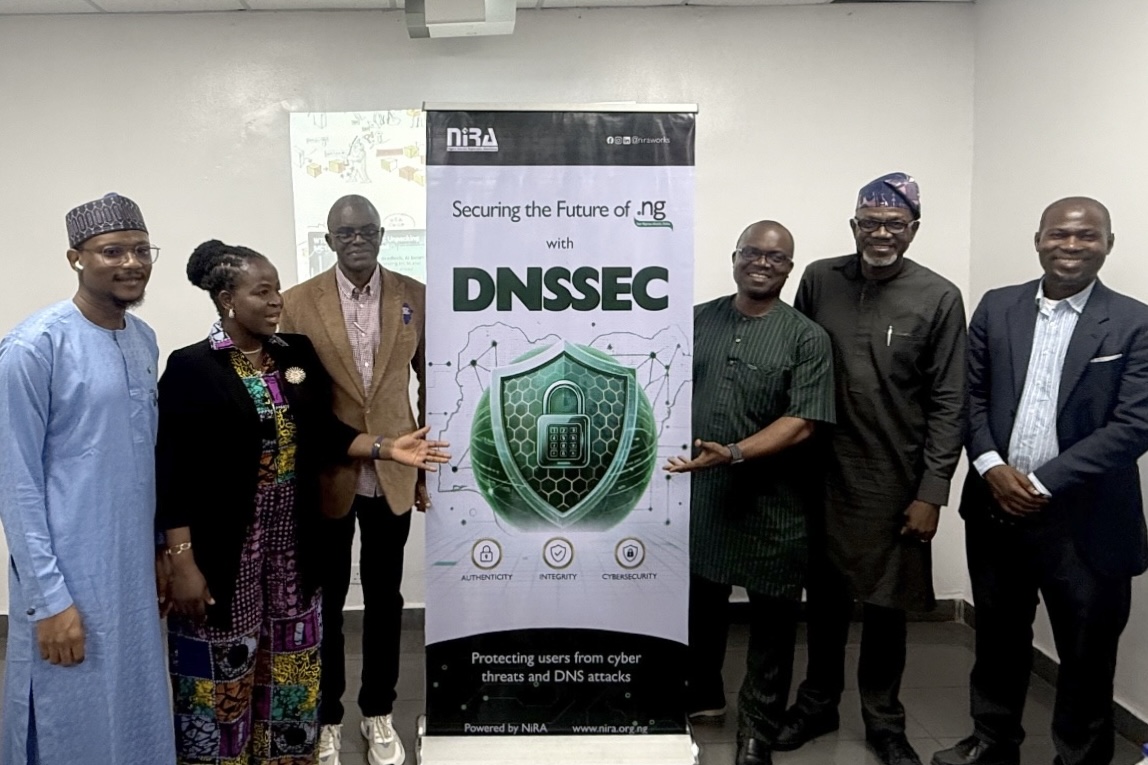
Nigeria has finally secured its .ng domain with Domain Name System Security Extensions (DNSSEC), a new layer of protection, ending a process that started as far back as 2011.
Seeking to enhance trust, adoption and ensure money circulates within the country rather than being lost to foreign platforms, the Nigeria Internet Registration Association (NiRA) confirmed it has deployed DNSSEC across the .ng domain, meaning the country’s internet addresses can now be verified and protected against cyber attacks.
At the unveiling, Adesola Akinsanya, NiRA president, said the move is meant to stop attackers from redirecting users to fake websites, a growing risk as more services move online.
“The successful deployment and unveiling of DNSSEC on the ng domain represents a defining moment for Nigeria’s internet ecosystem,” the President said.
Described as a long-awaited fix to a weak point in Nigeria’s digital system, DNSSEC provides all round protection. The internet already translates website names into numerical addresses, but it was built on trust. However, that trust can be exploited.
DNSSEC adds a verification layer, confirming that when a user types a .ng website, they are reaching the real destination, not a fake one set up by criminals.
If attackers control a domain’s routing, they can redirect traffic without hacking the website itself. DNSSEC is meant to block that route.
“This achievement did not happen overnight. It is as a result of years of commitment, collaboration and shared vision,” Adebiyi Oladipo, vice chair, ICANN ccNSO said.
The DNSSEC has now been fully signed and is in a monitoring phase, with a gradual rollout planned for registrars and domain owners.
The upgrade puts Nigeria in line with global standards and strengthens trust in local digital services.
Adoption, the bigger problem
The conversation went beyond technology to the issue of Nigerians not using .ng enough. Awareness is low, hence, the media is key to changing that.
Billions still leaving the country
Beyond perception, the economic argument cannot be ignored. NiRA said Nigeria loses billions every year to foreign domain registration and hosting services, as businesses choose .com and host their platforms abroad.
That money, they argued, should stay in the country, especially as local data centres now have the capacity to handle large-scale hosting.
NiRA also confirmed plans to work with organisations like the Corporate Affairs Commission to tie business registration more closely to domain ownership.
What comes next
NiRA is now pushing for adoption, with banks, telecom firms, government agencies and e-commerce platforms being asked to enable DNSSEC and move fully into the .ng space.
“This unveiling is not just about technology; it is about building trust in Nigeria’s digital future,” Oluwaseyi Onasanya, the COO said.



