


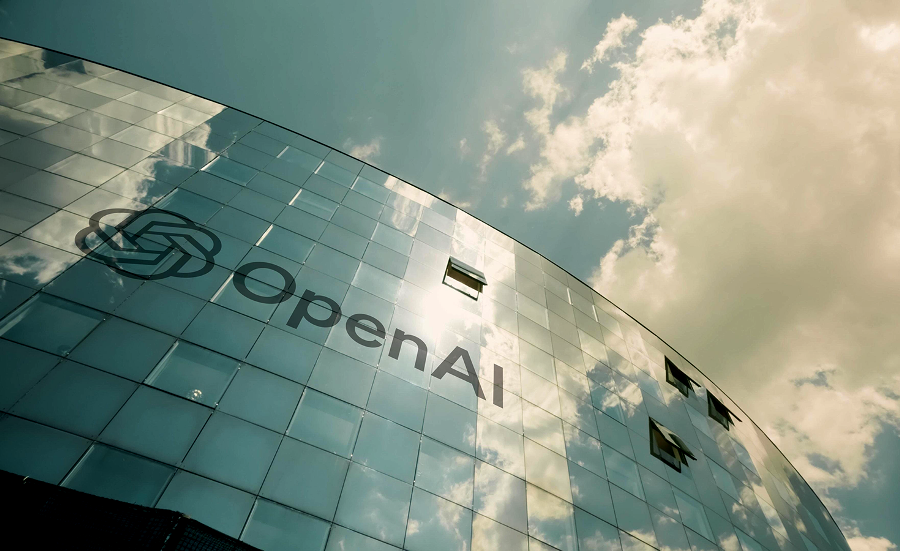
OpenAI recently put its Stargate UK data centre project on hold, pointing to the high cost of energy and unfavourable regulations as key challenges.
The company confirmed that it will not proceed with the British phase of the project for now, saying work will resume only when conditions support long-term investment.
Stargate UK, developed with Nvidia and British developer Nscale, was announced in September 2025 as part of a plan to expand global data centre capacity.
The project was expected to deploy up to 31,000 AI chips and strengthen the country’s ability to run its own artificial intelligence systems.
That capacity, usually called sovereign compute, allows a country to manage sensitive data and AI workloads locally instead of relying on overseas providers.
OpenAI said in a statement:
“We see huge potential for the UK’s AI future. AI compute is foundational to that goal, we continue to explore Stargate UK and will move forward when the right conditions such as regulation and the cost of energy enable long-term infrastructure investment.”
The decision is a setback for the UK government as Prime Minister Keir Starmer has made artificial intelligence central to his economic plans and wants Britain to attract more global tech investment.
Officials insist talks are still ongoing. A spokesperson said the government is “continuing to work with OpenAI and other leading AI companies to strengthen UK compute capacity”.
At the same time, they pointed to more than £100 billion in private investment that has flowed into the UK’s AI sector since 2024.
The cost of energy is also a big issue. Britain has some of the highest electricity prices in Europe, and large data centres require vast amounts of power to run and cool advanced chips. Regulation is another concern, especially those around data use and copyright.
OpenAI has been expanding its data centre footprint in other regions. Its Stargate programme includes projects in the United States, Norway and the United Arab Emirates. The first major campus is already underway in Texas.
The pause in the UK also comes as the company strengthens its focus. It has scaled back some side efforts and is concentrating more on core services like ChatGPT.
Competition is increasing, with companies such as Anthropic and Google pushing ahead with their own systems.
Commenting on the development, David Sherman, head of Brand Strategy at io.net,
“OpenAI pausing Stargate UK is a clear signal that centralised AI infrastructure is fragile by design. When a single company can shelve billions in compute investment over energy costs and regulatory uncertainty, it exposes a deeper issue: nations and businesses cannot afford to anchor their AI strategies to the decisions of a handful of hyperscalers.
The global economic climate is making these mega data centre projects harder to justify. Energy prices remain volatile, capital is more expensive, and geopolitical tensions add further uncertainty. Rather than waiting for the “right conditions” to attract big tech, the smarter move is to better utilize the GPU capacity that already exists.
This is exactly why decentralised compute matters. By aggregating underutilized GPUs across a global network, it can deliver AI infrastructure at up to 70% lower cost than centralized providers. Instead of relying on one company’s willingness to invest, decentralised networks distribute both capacity and risk. The compute is out there, we just need to unlock and utilise it.”



