
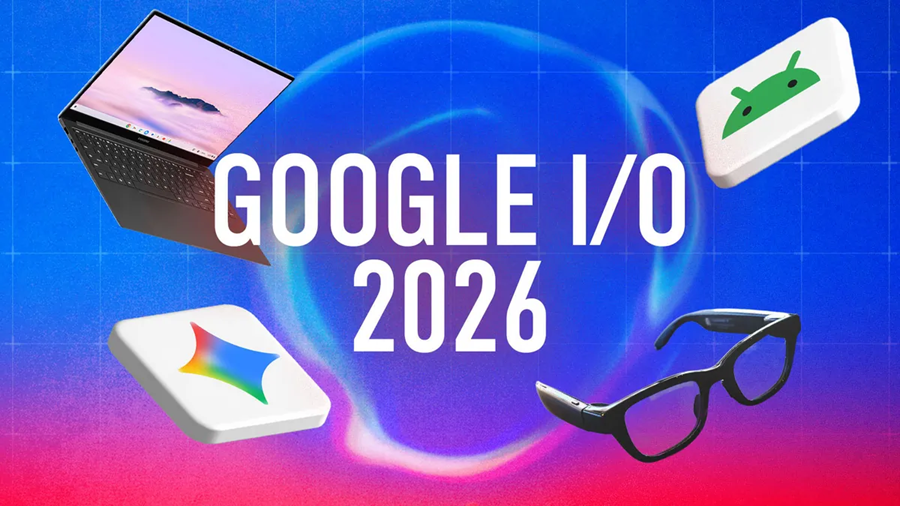
Google officially scheduled its Google I/O event for May 19 and 20, 2026, and as the date approaches, attention has once again shifted to the Shoreline Amphitheatre.
This is where the company is expected to make some of its most defining announcements in years.
But unlike previous years, when upgrades felt incremental, this year’s event is expected to introduce more foundational changes.
Three things are expected to steal the spotlight at the event:
- Gemini 3
- Android 17
- Smart Glasses
Gemini 3: From Chatbot to Proactive AI Agent
The launch of Gemini 3 is expected to mark a decisive shift beyond conversational AI into what can best be described as “agentic computing”.
This means that instead of waiting for prompts, Gemini 3 will be able to initiate actions on its own. While this may sound technical, it is the culmination of Google’s efforts to make its AI systems more automated while still remaining user-friendly.
Think of automatically organising expense reports from emails, rescheduling meetings based on traffic conditions, or compiling research summaries across multiple tabs without direct instruction. This means less interaction and more delegation.
Another technical change expected alongside Gemini 3 is expanded on-device processing. With NPUs improving, Gemini 3 is expected to handle more tasks locally, and the advantages are commendable.
Users could get faster responses, reduced dependence on internet connectivity, and improved privacy, especially in bandwidth-constrained environments like Nigeria.
Android 17: Features and Compatibility
When Google launched Android 16, the focus was mainly on performance improvements. This time, Android 17 is expected to redefine user interaction.
According to rumours, Android 17 is reportedly built on a “refined by default” approach, where the design is more effortless and polished.
The update is also expected to follow an intelligence-first interface, where the operating system anticipates user behaviour, suggests actions, and even adjusts system settings before users manually intervene.
Connectivity is also expected to take a step forward. Android 17 may expand satellite communication support beyond emergency use into limited everyday messaging. Combined with existing 5G support, this could improve connectivity resilience in regions still struggling with inconsistent network infrastructure.
On security, Google will most likely respond to growing concerns around AI misuse with new Android 17 features. These may include:
- Advanced biometric data isolation
- System-level labelling for AI-generated content
- Expanded app permission transparency
Hardware: The Return of Google Smart Glasses
For smart glasses enthusiasts, this could be the most intriguing part of Google I/O 2026. This time, Google’s return to smart glasses is expected to take a more practical approach and will likely be deeply integrated with Gemini 3.
Built around the rumoured Project Iris, the anticipated release is expected to introduce lightweight wearable AR glasses designed for everyday use rather than niche applications.
Key use cases are expected to include:
- Navigation overlays directly in the user’s field of view
- Live translation, especially useful in multilingual situations
- Improved visual search powered by an always-on version of Google Lens
The upcoming Google I/O event is also expected to feature other strategic announcements, which could include improvements to Tensor chips, possibly the G5 or G6, as well as updates on the next Pixel series.
With the hype around I/O reaching its peak, the event won’t just be about a standalone product launch, but an ecosystem realignment.
For the average user, the impact may not be immediately visible, but by late 2026, these changes could significantly alter how Android devices are used, at least for users eligible for the updates.