ADVERTISEMENT
Sunday, May 17, 2026
Tech | Business | Economy
No Result
View All Result
  • Technology
    • Trends
    • Telecoms
      • Broadband
    • ConsumerTech
      • Gadgets and Appliances
      • Apps
      • Accessories
      • Reviews
      • Unboxing
    • EnterpriseTECH
    • Security & Data Protection
    • How To
  • Business
    • Company News
    • StartUPs
      • Founder’s Story
      • Funding
    • Deals
    • People & Moves
    • SME & Entrepreneur Focus
    • BUSINESS SENSE FOR SMEs
    • Competition & Market Positioning
    • Commerce & Mobility
    • Travel
    • WomenPreneurs
  • Economy
    • Macroeconomic Trends
      • Macro Monday
      • TE Insights
    • Finance
      • Banks
      • Fintech
      • Insurance
      • Digital Assets
      • Personal Finance
    • Policies
      • Tech & Society
    • Market Analysis
    • Jobs & Workforce Economy
  • Features
    • Guest Writer
      • Chidiverse
      • Digital Assets
      • GameTech
    • EventDIARY
    • IndustryINFLUENCERS
    • MarkTECH
    • TBS
    • NewsEXTRA
  • Editorial
  • Brand Content
  • TECHECONOMY TV
Sunday, May 17, 2026
Tech | Business | Economy
No Result
View All Result
Tech | Business | Economy
No Result
View All Result

Home » Out of His Depth: Why Rosenior Was Never the Right Fit for Chelsea

Out of His Depth: Why Rosenior Was Never the Right Fit for Chelsea

Techeconomy by Techeconomy
April 27, 2026
in Brand Content
Reading Time: 3 mins read
0
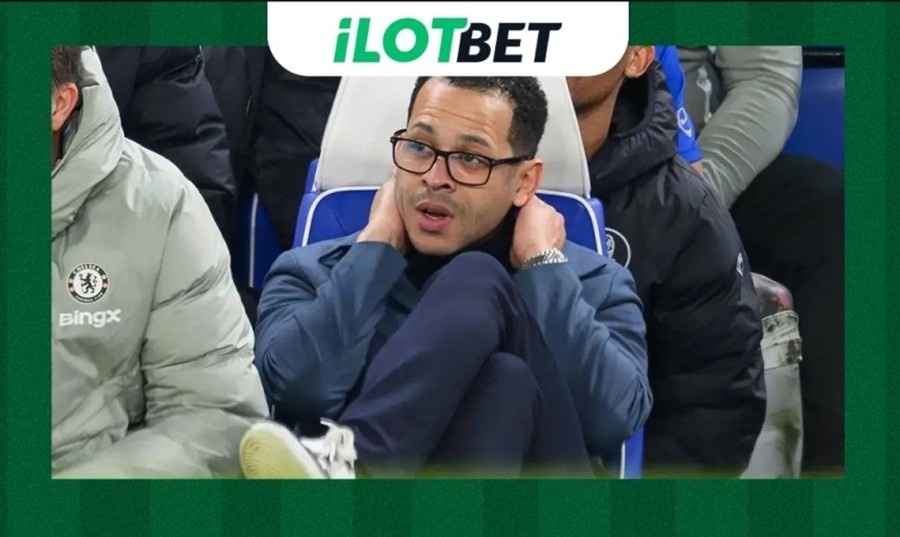
Rosenior and Chelsea

Liam Rosenior, former Chelsea FC coach.

There’s a difference between potential and readiness, and at Chelsea FC, that distinction has been brutally exposed in recent weeks.

Liam Rosenior arrived with a reputation as a progressive, intelligent coach. His work at RC Strasbourg Alsace in Ligue 1 and familiarity with the club’s ownership model made him an appealing internal solution.

But Chelsea is not a finishing school for promising managers. It is one of the most demanding environments in world football, where authority must be immediate, not developed over time.

That is where the problem began.

From the outset, Rosenior looked like a coach trying to grow into the role rather than one commanding it. Managing a squad filled with high-value, high-ego internationals, requires more than tactical ideas.

Subscribe to our Telegram channel for the latest updates.

Follow the latest developments with instant alerts on breaking news, top stories, and trending headlines.

Join Channel

It demands presence, credibility, and a track record players instinctively respect. Rosenior, for all his qualities, simply didn’t have that currency.

The consequences were predictable.

Chelsea’s performances became increasingly disjointed, but more telling was the visible erosion of control.

Selection leaks, public dissent, and questionable in-game management all pointed to a dressing room that wasn’t fully aligned with its coach. At elite clubs, once that connection weakens, results tend to follow, and not in a good way.

It would be too easy, however, to frame this purely as Rosenior’s failure. The deeper issue lies with the decision-makers.

Since the takeover by Clearlake Capital and Todd Boehly, Chelsea have pursued a bold, data-driven strategy focused on youth and long-term upside. In theory, appointing a young, adaptable coach fits that model.

In reality, it overlooked a fundamental truth of top-level football: development projects still need experienced leadership.

Compare that to clubs like Brighton & Hove Albion, whose model Chelsea have tried to emulate. Brighton blend data with stability, ensuring that young players are guided by seasoned professionals and coached within a clearly defined structure.

Chelsea, by contrast, have combined one of the youngest squads in Europe with an equally inexperienced manager, a risky equation that has now unravelled.

Rosenior’s tactical inconsistencies didn’t help. His decision-making in key moments, particularly in high-stakes matches, often raised questions.

More damaging, though, was the sense that he was reacting to problems rather than controlling them. At a club like Chelsea, that perception alone can be fatal.

None of this suggests Rosenior lacks ability. On the contrary, he remains one of the more promising young coaches in the game. But timing matters.

At this stage of his career, he needed a platform to refine his ideas, not the pressure cooker of Stamford Bridge.

Chelsea, meanwhile, are left confronting an uncomfortable reality. Ambition without structure leads to instability, and potential without leadership rarely delivers success.

Appointing Rosenior may have aligned with their long-term vision, but in the short term, it exposed a critical misjudgment.

In the end, the conclusion is difficult but clear, Rosenior wasn’t just underperforming, he was out of his depth. And at Chelsea, that is a gap that quickly becomes impossible to bridge.

Register with iLOTBET today and bring that same thrill into your game, where every moment can surprise you.


0Shares
Previous Post

China Orders Meta to Reverse $2bn Deal for AI Startup Manus

Next Post

TriFetch Secures $1.9M Pre-Seed to Automate Clinic Admin Tasks

Techeconomy

Techeconomy

Related Posts

Meet the TECNO SPARK 50 - The Hustle Phone is Here!

TECNO Unveils SPARK 50: Built to Deliver “Power for Days”

May 14, 2026
Consumers Value Awards | BrandXchange

Consumers Value Awards Opens Voting for 5th Edition

May 13, 2026

COFFHA Launches N300million Skill Acquisition Campaign

May 11, 2026
Load More
Next Post
TriFetch Automate Clinic Admin Tasks

TriFetch Secures $1.9M Pre-Seed to Automate Clinic Admin Tasks

Leave a Reply Cancel reply

Your email address will not be published. Required fields are marked *

I agree to the Terms & Conditions and Privacy Policy.

This site uses Akismet to reduce spam. Learn how your comment data is processed.

Techeconomy Podcast
Techeconomy Podcast

The Techeconomy Podcast is a thought-leadership show exploring the powerful intersection of technology, business, and the economy, with a strong focus on Africa’s fast-evolving digital landscape.

PROTECTING INNOVATION IN AFRICA’S STARTUP ECOSYSTEM
byTecheconomy

Protecting Innovation in Africa’s Startup Ecosystem . A timely conversation for the future of African entrepreneurship.

PROTECTING INNOVATION IN AFRICA’S STARTUP ECOSYSTEM
April 29, 2026
Techeconomy
BUILDING TRUST IN AFRICA ECOSYSTEM
February 27, 2026
Techeconomy
Navigating a Career in Tech Sales
January 29, 2026
Techeconomy
How Technology is Transforming Education, Health, and Business
November 27, 2025
Techeconomy
INNOVATION IN MOBILE BANKING
October 30, 2025
Techeconomy
Search Results placeholder
ADVERTISEMENT
  • About Us
  • Careers
  • Contact Us
  • Privacy Policy

© 2026 TECHECONOMY.

No Result
View All Result
  • Technology
  • Business
  • Economy
  • Features
  • Editorial
  • Brand Content
  • TECHECONOMY TV

© 2026 TECHECONOMY.

This website uses cookies. By continuing to use this website you are giving consent to cookies being used. Visit our Privacy and Cookie Policy.