


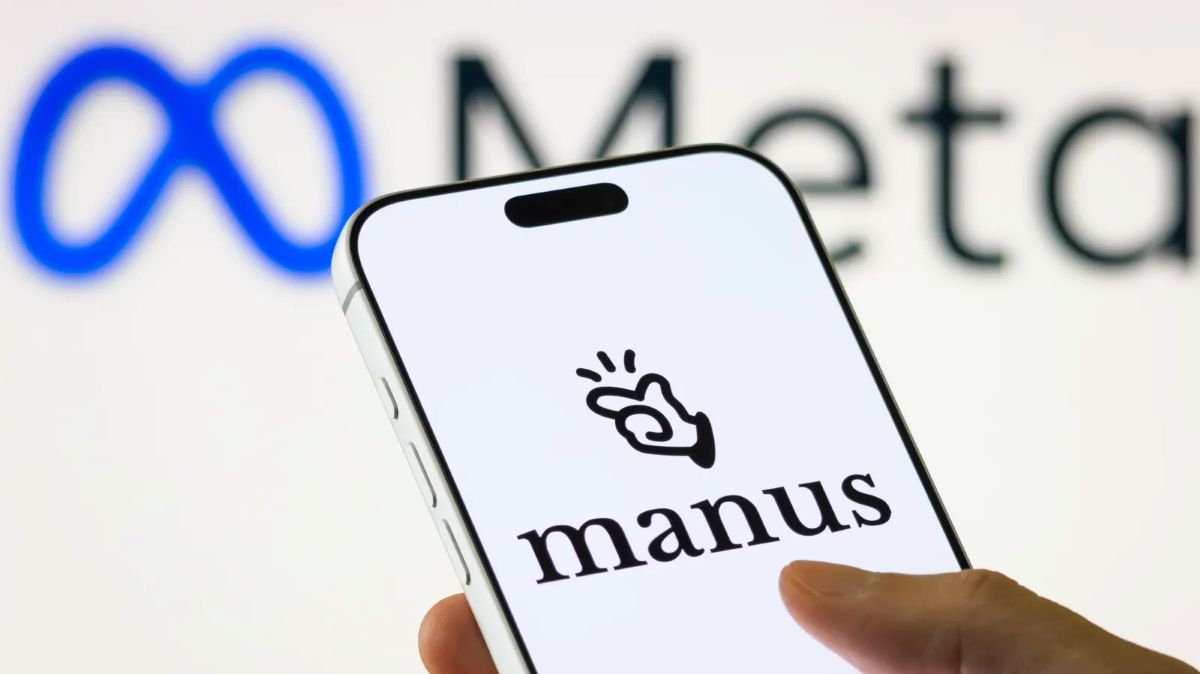
China has ordered Meta to reverse its $2 billion to $2.5 billion acquisition of artificial intelligence startup Manus.
The order, one of Beijing’s strongest moves yet against a foreign purchase of a Chinese tech company, came on Monday from China’s National Development and Reform Commission (NDRC), which said foreign investment in Manus would be prohibited under Chinese law, and the deal must be unwound.
Beijing is now concentrating on AI talent, software and intellectual property, and areas once taken over by chip restrictions now include artificial intelligence, as competition between China and the United States gets stronger
Chinese authorities began examining the acquisition in January, shortly after Meta completed the purchase in December. The review later intensified, and in March, Manus co-founders Xiao Hong and Ji Yichao were reportedly called to Beijing for talks with regulators and then barred from leaving China.
Neither founder publicly responded to requests for comment.
Meta has also not issued a public response.
Manus had drawn attention in China after launching what it described as a general AI agent in 2025. State-backed media had commended the company as a possible successor to DeepSeek, one of China’s most-watched AI firms.
Unlike model developers who build large language systems from scratch, Manus focused on agent software designed to complete multi-step tasks with limited human input. These tasks include coding, research and workflow automation.
Before the takeover, Manus raised $75 million in funding led by Benchmark in May 2025.
The company later shut its China offices and moved operations to Singapore, where its parent company, Butterfly Effect, was restructured. That move was seen as an attempt to attract foreign capital while easing both U.S. and Chinese restrictions.
Chinese regulators now appear determined to challenge that route.
The practice, sometimes called “Singapore washing”, involves Chinese-founded startups shifting legal structures or operations abroad while keeping roots in China. The latest development with Beijing reveals that strategy may no longer guarantee protection from investigations.
Startups moving overseas may not be enough as authorities may now demand proof of where management is headquartered, where research is done, where data is stored and who controls the company’s technology.
The China ruling could also create some problems for Meta, as some Manus staff had already moved into Meta’s Singapore offices, while parts of the startup’s work were reportedly being integrated into Meta projects.
Any reversal may now require separating teams, contracts and technology already tied together.
This is coming weeks before a planned summit in Beijing between U.S. President Donald Trump and Chinese President Xi Jinping in mid-May.
That meeting was expected to cover trade and technology tensions, but this issue now adds another case.
China has previously criticised foreign-linked deals involving strategic assets, but forcing the breakup of a completed transaction is rare.
China does not want core AI assets leaving its reach, no matter where a company later relocates.

Discover more from Tech | Business | Economy
Subscribe to get the latest posts sent to your email.



